Cheap WordPress Hosting (2026): Best Budget Plans Compared
Some links on this page are affiliate links. If you buy through them, we may earn a commission at no extra cost to you. It never decides what we recommend —read how we make money.
Nearly every host advertises a WordPress plan for a couple of dollars a month. Very few of those plans cost a couple of dollars a month for long. The real price of cheap hosting depends on three things the headline hides: how long you have to prepay, what it renews at, and what’s missing from the entry plan.
This guide compares the budget hosts we cover on those three points, shows when each one stops being cheap, and prices out the upgrades that are actually worth it. All prices were checked on each provider’s website on September 15, 2026.
The Cheapest WordPress Hosts at a Glance
| Host & entry plan | Intro price | Term for that price | Paid upfront | Renews at |
|---|---|---|---|---|
| ChemiCloud WordPress Starter | $1.95/mo | 36 months | $70.20 | $11.95/mo |
| GreenGeeks Lite | $2.95/mo | 12 months | $35.40 | $13.95/mo |
| Hostinger Premium | $2.99/mo | 48 months | $143.52 | $10.99/mo |
| UltaHost Ulta WordPress | $3.22/mo | 24 months | $77.28 | See note* |
*UltaHost shows two renewal figures for this plan: $3.22/mo “for 2 years” and a regular price of $5.51/mo. Confirm the renewal terms at checkout. Prices checked September 2026.
When “Cheap” Stops Being Cheap
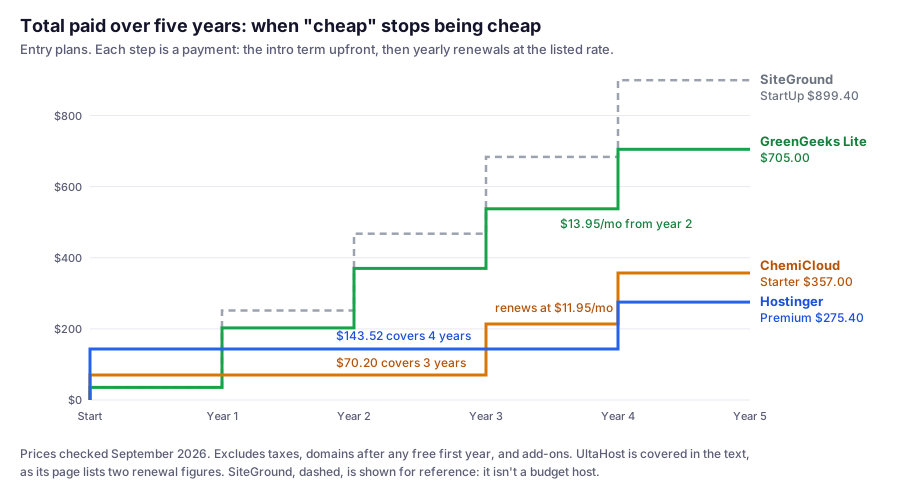
Intro prices only tell you about the first term. The chart below shows what you’ve paid in total at each point over five years, with each step being a real payment: the intro term upfront, then yearly renewals at the listed rate.
| Host & entry plan | After 1 year | After 3 years | After 5 years |
|---|---|---|---|
| Hostinger Premium | $143.52 | $143.52 | $275.40 |
| ChemiCloud WordPress Starter | $70.20 | $70.20 | $357.00 |
| GreenGeeks Lite | $35.40 | $370.20 | $705.00 |
| For reference: SiteGround StartUp | $35.88 | $467.64 | $899.40 |
Totals paid by the end of each period, from prices checked September 2026. Excludes taxes, domain renewals, and add-ons.
What the chart shows:
- Long intro terms are what make budget hosts cheap. Hostinger’s 48 months and ChemiCloud’s 36 months lock in the low price for most of the period. The catch is paying for those years on day one.
- The cheapest first year is the most expensive five years. GreenGeeks costs just $35.40 upfront, but only 12 months are discounted. By year five, it’s cost nearly twice as much as ChemiCloud and about 2.5 times as much as Hostinger.
- ChemiCloud and Hostinger swap places. ChemiCloud is cheaper for the first three years; after its renewal starts, Hostinger’s longer discount wins.
UltaHost isn’t in the chart because its page lists two renewal figures: a renewal at $3.22/mo “for 2 years” and a regular price of $5.51/mo. If the $3.22 rate applies for another two years, four years would cost $154.56; at its listed regular price, $209.52. Either way, it’s in the same range as the cheapest options.
What the Entry Plans Leave Out (and What Fixing It Costs)
Cheap plans are cheap partly because they cut features. Some cuts don’t matter for a small site. Others do, and upgrading one tier is often the cheapest fix:
| Entry plan | What’s missing or tight | One tier up | Extra cost |
|---|---|---|---|
| Hostinger Premium | Weekly backups, no staging, 3 sites | Unlimited: daily backups, staging, unlimited sites | $1/mo intro, $48 over 4 years |
| ChemiCloud Starter | No staging, 1 site, 10 entry processes | Pro: staging, unlimited sites, 15 entry processes, 20 daily backups | $1/mo intro, $36 over 3 years |
| UltaHost Ulta WordPress | 1 site, 1 email account, 2 databases | WordPress Starter: 100 sites, ~25,000 est. visits | $1.96/mo intro |
| GreenGeeks Lite | 1 site | Pro: unlimited sites, 50 GB | $2/mo intro, $5/mo more at renewal |
From each host’s plan pages, checked September 2026. Intro prices on each host’s standard intro term.
The one I’d always pay for: Hostinger Unlimited over Premium. With weekly backups, a problem can cost you up to a week of changes. Daily backups plus staging for $48 over four years is the best-value upgrade on this page.
The Catches to Check Before You Buy
1. Your term decides your refund rights
Most hosts give a money-back window whatever term you choose: 30 days at Hostinger and GreenGeeks, 45 days at ChemiCloud. UltaHost is the exception. Its refund policy covers monthly and annual WordPress plans, but not 24- or 36-month plans, and not plans bought through a special promotion or discount link. The $3.22/mo headline price is a 24-month term. If you want a way out, choose a monthly or annual term and accept a higher monthly price.
2. “Free” domains come off your refund
A free first-year domain is common on cheap plans. Both Hostinger and ChemiCloud deduct the domain’s standard price from your refund if you cancel within the money-back period after claiming one, and ChemiCloud’s free domain requires a 36-month plan. The domain also renews at the regular price after year one, so budget for it.
3. Payment method exclusions
Hostinger accepts PayPal, Apple Pay, and Google Pay in many regions, which is handy on a budget. But purchases paid with cryptocurrency aren’t refundable under Hostinger’s policy.
4. Shared limits apply to every site on the account
Plans that allow several sites give them one set of limits. On Hostinger Premium, three sites share 1 CPU core, 2 GB of RAM, and 40 PHP workers. That’s fine for small, cached sites; one busy site can slow the others.
The Best Cheap WordPress Hosts
1. Hostinger: Lowest Long-Term Cost
Hostinger has the lowest four- and five-year cost of any managed WordPress host we cover, runs on LiteSpeed servers, and publishes its CPU, RAM, and PHP worker limits. Our pick is Unlimited: $1/mo more than Premium, with daily backups, staging, and unlimited sites.
Best for
- The lowest total cost over four or five years
- Running up to 3 small sites on the entry plan
- Paying by PayPal, Apple Pay, or Google Pay (region-dependent)
Not for
- Anyone who doesn't want to prepay 48 months
- Sites that change often, if you choose Premium (weekly backups)
Price: Premium $2.99/mo (48 months, $143.52 upfront), renews at $10.99/mo · Unlimited $3.99/mo ($191.52 upfront), renews at $16.99/moPrices checked: September 2026
Why it wins on budget: $143.52 covers four years on Premium, and the $10.99/mo renewal is lower than ChemiCloud’s or GreenGeeks’.
The trade-offs: the 48-month commitment, weekly backups on Premium, and a domain and mailboxes that are only free for year one. Hostinger replaced its Business plan with Unlimited in July 2026, so older guides that mention “Business” mean this tier. Full details in our Hostinger review.
2. ChemiCloud: Lowest Upfront for a Multi-Year Plan
ChemiCloud has the lowest intro price on this list and includes daily backups, with 10 kept, even on its cheapest plan. It also offers cPanel, free migrations, and a 45-day money-back guarantee.
Best for
- Daily backups on the cheapest plan
- cPanel users
- Buyers who want a longer refund window (45 days)
Not for
- Anyone who wants more than one site on the entry plan
- Buyers who don't want a 36-month term
Price: WordPress Starter $1.95/mo (36 months, $70.20 upfront), renews at $11.95/moPrices checked: September 2026
Why it’s a strong budget pick: three years of hosting for $70.20, with daily backups that Hostinger only includes from its second tier.
The trade-offs: one website and no staging on Starter, a 36-month term for the intro price, and a renewal about six times the intro rate. If you’re running a store, look at Pro or Turbo instead: Starter’s 10 entry processes limit how many uncached requests, like carts and checkouts, run at once. See our ChemiCloud review.
3. UltaHost: Low Price With Published Traffic Estimates
UltaHost publishes an estimated monthly visit count for each plan, which makes it easy to choose a tier. It also shows a renewal at the intro price, which would make it very cheap over time. Confirm that at checkout, and choose your term with the refund policy in mind.
Best for
- Small sites that fit within ~10,000 monthly visits (UltaHost's estimate)
- Buyers who want to know roughly how much traffic a plan handles
- Sites that may later move up to UltaHost's VPS WordPress plan
Not for
- Anyone who wants the headline price and a refund window
- Anyone who needs multiple email accounts or databases on the entry plan
Price: Ulta WordPress $3.22/mo on a 24-month term ($77.28 upfront)Prices checked: September 2026
The trade-offs: the entry plan is small (1 site, 1 email account, 2 databases), and the headline price is on a term that can’t be refunded. Our UltaHost review explains the policy term by term.
4. GreenGeeks: Cheapest First Year
GreenGeeks asks for the least money upfront and runs a “300% Energy Match” program. With only 12 months discounted, it’s the most expensive of these four hosts from year two onward.
Best for
- The smallest upfront payment ($35.40 for 12 months)
- Trying a host without a multi-year commitment
- Buyers who value a renewable energy commitment
Not for
- Anyone planning to stay more than a year or two on a budget
Price: Lite $2.95/mo prepaid for 12 months, renews at $13.95/moPrices checked: September 2026
Why it’s on the list: a 12-month intro term is the smallest commitment here, which matters if you’re not sure the site will last. Just plan to reassess before the first renewal.
For Developers: A Cheap VPS Instead
If you’re comfortable managing your own server, an unmanaged VPS can be cheap for the resources you get. Evoxt offers a 2 GB RAM VPS (VM-1) at $5.99/mo, with US and European locations (checked September 2026). That’s $359.40 over five years, with no renewal jump.
It isn’t managed hosting, though. You install and secure the web server, PHP, the database, SSL, and backups yourself. For most people, that time costs more than the savings. See managed vs. shared hosting for exactly what you take on, and best VPS hosting for WordPress to compare providers.
Four Budget Situations, With the Math
These use prices verified in September 2026. The situations are illustrative examples.
A Hobby Blog You Plan to Keep
Pick: Hostinger Unlimited. $191.52 covers four years, then $16.99/mo. Five-year total: $395.40, with daily backups and staging throughout.
Cheaper still: Premium at $275.40 over five years, if you’re happy relying on weekly backups plus your own manual backup before updates.
Testing an Idea That Might Not Last
If there’s a real chance you’ll abandon the site within a year, the refund window only protects you for the first 30–45 days. After that, what you’ve paid is gone:
| Host | Paid upfront, and lost if you quit at month 6 |
|---|---|
| GreenGeeks Lite (12 months) | $35.40 |
| ChemiCloud Starter (36 months) | $70.20 |
| UltaHost Ulta WordPress (24 months, non-refundable) | $77.28 |
| Hostinger Premium (48 months) | $143.52 |
Pick: GreenGeeks for the smallest commitment, or check whether your preferred host offers a shorter term. It will cost more per month, but less in total if you stop early.
A Portfolio Plus Two Small Client Sites
Pick: Hostinger Premium covers all three for $143.52 over four years, about $47.84 per site. Unlimited adds daily backups for $191.52, about $63.84 per site. On ChemiCloud, three sites need WordPress Pro: $321.60 over four years (36 months at $2.95, then 12 at $17.95).
Watch: all three sites share one account’s limits, and on Hostinger the PHP version applies to every site on the plan. Keep any client with real traffic on a separate plan.
A Small Shop on a Budget
Skip the entry plans. Carts and checkouts can’t be page-cached, so a store needs more concurrency and, ideally, staging to test updates before they reach customers. Start with Hostinger Unlimited ($191.52 for four years) or ChemiCloud WordPress Pro ($321.60 over four years). If sales grow and your host’s usage graphs start hitting limits, see shared hosting vs. VPS for the next step.
Making a Cheap Plan Go Further
A budget plan’s limits are fixed, so the trick is making each request cost less. These are the checks I’d do in the first week:
- Confirm page caching works. Open your site logged out, open your browser’s developer tools, reload, and check the page request’s headers. Hostinger and ChemiCloud run LiteSpeed, so look for
x-litespeed-cache: hit. A cached page barely touches your plan’s limits. - Know where your usage graphs are. Hostinger: Websites → Dashboard → Hosting plan → Resources Usage. ChemiCloud: cPanel → Metrics → Resource Usage. Check them after your first traffic spike, not when something breaks.
- Use a lightweight theme. A lean theme like GeneratePress means less work per page, which matters most on the pages that can’t be cached.
- Resize images before uploading. Large originals fill storage and create extra resized copies. On a 20 GB plan, that adds up.
- Don’t keep backup archives on the same account. Backup plugins that store archives locally use your storage and file count (inodes), and don’t protect you if the account itself has a problem. Store them off-site.
- Fix scheduled posts on quiet sites. WordPress’s built-in scheduler (WP-Cron) only runs when someone visits. On a low-traffic site, scheduled posts can go out late. The fix is to disable WP-Cron in
wp-config.phpand trigger it with a real cron job from your hosting panel.
When Paying More Is the Smarter Budget Choice
Cheap hosting is great for a hobby blog or a site you’re testing. It’s worth paying more when:
- The site earns money or generates leads. Losing days of changes to a weekly backup can cost more than years of price difference.
- You want a short commitment without paying for GreenGeeks’ high renewals.
- You want the host to handle more for you, with WordPress-specific tools rather than a generic panel.
In those cases, SiteGround is our recommendation for most beginners. It costs more over time, but includes daily backups (30 copies) on every plan, staging from GrowBig up, and only a 12-month first commitment. See our SiteGround review or SiteGround vs Hostinger.
Want the full picture of what a website costs, beyond hosting? See how much a website costs in 2026.
FAQ
What is the cheapest WordPress hosting?
By intro price, ChemiCloud's WordPress Starter at $1.95/mo on a 36-month term. By total cost over four or five years, Hostinger Premium: $143.52 for the first four years, $275.40 by year five. By first payment, GreenGeeks Lite at $35.40 for 12 months (all checked September 2026).
Is cheap WordPress hosting good enough?
For a new blog, portfolio, or small site, often yes. Check three things first: the renewal price, whether backups are daily or weekly, and the plan's limits on sites, email accounts, and concurrent requests. Stores should start one tier up.
Why does cheap hosting get so expensive at renewal?
Intro prices are discounts for your first term only. For example, ChemiCloud Starter goes from $1.95/mo to $11.95/mo, and GreenGeeks Lite from $2.95/mo to $13.95/mo after the intro term (checked September 2026).
Should I choose a longer hosting term to save money?
Longer terms lower the total cost, but you pay more upfront and commit for years. Money-back windows only cover the first 30 to 45 days, and UltaHost's 24-month and longer plans aren't refundable at all. If you're unsure about a project, a shorter term costs more per month but less if you stop early.
Which cheap host has daily backups on the entry plan?
Of the budget hosts compared here, ChemiCloud's WordPress Starter includes daily backups with 10 kept, and GreenGeeks includes daily backups. Hostinger's Premium plan has weekly backups, with daily backups starting on the Unlimited plan for $1/mo more.
Is a cheap VPS better than cheap shared hosting?
Only if you can manage a server yourself. An unmanaged VPS like Evoxt's 2 GB plan at $5.99/mo gives more resources per dollar with no renewal jump, but you handle setup, security, updates, and backups. For most WordPress beginners, managed shared hosting is the better value.
The Bottom Line
For the lowest long-term cost, choose Hostinger, ideally Unlimited for daily backups and staging. For the smallest upfront spend on a multi-year plan with daily backups, choose ChemiCloud. If UltaHost’s stated renewal appeals, pick a term its refund policy covers. Treat GreenGeeks as a low-commitment first year rather than a cheap long-term home. And if the site matters to your income, weigh whether SiteGround’s shorter commitment and extra backups are worth the difference.